

Ceiling Light Singapore: How to Choose the Right Fixture for Every Room
Lighting is the single most transformative element in any Singapore interior — more so than paint colour, more so than furniture selection. A well-chosen ceiling light sets the mood, defines the scale of a room, and determines whether a Singapore home feels warm and welcoming or flat and institutional. Yet ceiling lights in Singapore remain one of the most under-invested categories in residential renovation, with many homeowners defaulting to whatever was installed by the developer and never revisiting the choice. Understanding what your specific rooms need — in terms of fixture type, colour temperature, and scale — is the foundation of a genuinely well-lit home.
Quick Answer
- Best for HDB living rooms (2.6–2.7m ceilings): Semi-flush or flush-mount with low-profile design, or pendant chandelier with max 30–40cm drop
- Colour temperature for living/bedrooms: Warm white 2700–3000K — relaxing and flattering; use 4000–4500K for kitchens and bathrooms
- Dining chandelier sizing: Diameter = 50–65% of dining table width; bottom of fixture 70–75cm above table surface
- Electrical installation: Must be done by a licensed electrician in Singapore — DIY is illegal under the Electricity Act
- Price range: SGD 30 (basic flush mount) to SGD 3,000+ (premium designer chandelier)
Those guidelines cover the fundamentals — but creating a truly well-lit Singapore home requires understanding how different fixture types interact with your specific room dimensions, ceiling heights, and existing natural light conditions.
Ceiling Light Types: Matching Fixture to Room in Singapore Homes
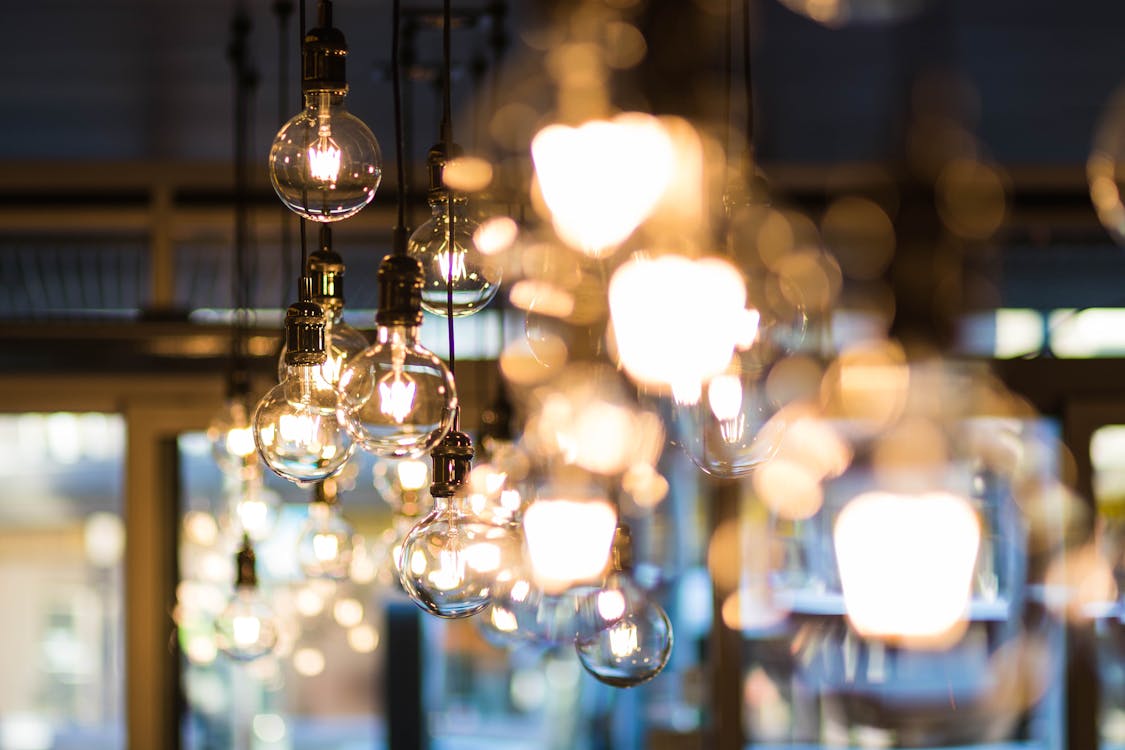
Singapore's residential ceiling light market divides into several distinct fixture categories, each suited to different room types and ceiling heights.
Flush-Mount and Semi-Flush Ceiling Lights
Flush-mount lights sit directly against the ceiling surface; semi-flush lights drop 10–30cm below. Both are the appropriate specification for Singapore's standard HDB flat ceiling heights of 2.6–2.7m, where pendant chandeliers with significant drops can encroach on comfortable headroom. Modern flush-mount designs have evolved considerably — the category now includes sculptural forms in brushed brass, matte black, and warm wood that make a genuine design statement while respecting the ceiling height constraint.
Pendant Lights and Chandeliers
Pendant lights — single or multi-bulb fixtures suspended by cord or rod from a ceiling rose — suit dining rooms, kitchen islands, and reading nooks where focused, directional light is desirable. For Singapore condominiums and landed properties with 2.8m–3.2m ceiling heights, pendant chandeliers with drops of 40–80cm become viable and create the kind of vertical drama that transforms a room from pleasant to genuinely impressive.
The chandelier in a Singapore dining room is among the highest-impact single furniture purchases available — it operates at exactly eye level for seated diners, creates intimate warmth over the table surface, and visually anchors the dining zone in open-plan spaces. Getting the sizing and height right matters enormously: a chandelier that is too small reads as an afterthought; one that hangs too low obstructs sightlines across the table.
Ceiling Fans with Lights
Singapore's climate makes ceiling fans a practical necessity in many rooms, and ceiling fan-light combinations — fans with integrated LED light kits — are extremely common in Singapore residential specifications. The practical advantage is obvious: one ceiling fixture serves both ventilation and illumination functions. The aesthetic limitation is that fan-light combinations require more visual compromise than either a dedicated fan or a dedicated light — the integration is always more functional than beautiful.
LED Panel Lights
LED panel lights — recessed square or rectangular luminaires — remain the standard specification in Singapore's new launch condominium bathrooms and kitchens. They provide even, shadow-free illumination suited to task lighting contexts. In living rooms and bedrooms, pure LED panel installations create a clinical, flat light quality that lacks the warmth and dimensionality of pendant or chandelier lighting — in these spaces, pendant or decorative ceiling lights are strongly preferable.
Colour Temperature: The Most Overlooked Ceiling Light Decision in Singapore
Colour temperature — measured in Kelvin — is the lighting specification that most directly determines whether a Singapore home feels warm and inviting or cold and institutional, and it is consistently under-specified in Singapore residential renovations.
Warm white light at 2700–3000K is the appropriate colour temperature for Singapore living rooms, dining rooms, and bedrooms. At this temperature range, skin tones appear natural and flattering, wood furniture warm and rich, and the overall atmosphere shifts toward the relaxed, comfortable quality that makes a home feel genuinely welcoming. This is the temperature range of traditional incandescent bulbs, which is why warm-white LED equivalents remain the preferred choice for residential spaces globally.
Cool white or neutral white at 3500–4500K suits Singapore kitchens and bathrooms where visual accuracy for food preparation, grooming, and cleaning tasks is important. At 4000K, colours appear accurate without the clinical harshness of pure daylight (5500–6500K), which is appropriate for commercial environments but feels unflattering and cold in residential spaces.
Radical Homes' lighting collection covers ceiling lights, pendants, and chandeliers across these fixture categories with warm-white LED specifications suitable for Singapore residential use. Singapore's Energy Market Authority (EMA) provides guidance on energy-efficient LED lighting standards and registered electrical contractors for installation.
How Singapore's Ceiling Light Market Compares
Sembawang Lighting House and Spotlight are Singapore's most established ceiling light retailers, with large showroom spaces in Balestier and Tampines respectively that allow buyers to see scale and light output in person — an important consideration for a category where online photography rarely conveys accurate fixture scale or light quality. Radical Homes curates a more design-focused ceiling light selection — chandeliers, semi-flush fixtures, and pendant lights chosen for aesthetic distinction and warm-light quality rather than breadth of catalogue. Note: Competitor mentions are for informational purposes only.
Singapore's lighting market spans a wide range of price points. IKEA offers affordable pendant and ceiling solutions, while Courts and Harvey Norman carry branded lighting from international manufacturers. Specialist lighting retailers such as Prolux and Philips flagship stores offer technical expertise. For statement and artisanal lighting pieces — such as washi paper pendants or sculptural table lamps — Radical Homes curates a selection focused on design integrity and craftsmanship. *Disclaimer: Brand comparisons above are for informational purposes only. Radical Homes is not affiliated with any third-party retailer mentioned.
How to Choose the Right Ceiling Light: How to Choose the Right Fixture for Every Room for Your Singapore Home
Selecting the perfect ceiling light: how to choose the right fixture for every room requires balancing several factors unique to Singapore's living conditions. With HDB flats averaging 90–110 square metres for a 4-room flat, and condos ranging from compact 50sqm studios to spacious 200sqm penthouses, size appropriateness is the first consideration. Measure your space carefully — not just the floor area, but ceiling height, door widths (especially important for larger furniture), and the overall flow of traffic through the room.
Material selection is equally critical in Singapore's tropical climate. Our year-round humidity of 70–80% and temperatures of 25–35°C can accelerate the deterioration of lesser materials. Natural wood species like teak and rubber wood have long been trusted in Southeast Asian furniture-making for good reason — they possess inherent oils and grain structures that resist moisture penetration. For metal components, powder-coated finishes far outperform bare metal in resisting the surface oxidation that Singapore's humidity accelerates.
What to Look for When Shopping for Ceiling Light: How to Choose the Right Fixture for Every Room in Singapore
Singapore's furniture market has expanded significantly over the past decade, with options spanning global fast-furniture brands, mid-market lifestyle retailers, and premium boutique importers. Understanding what differentiates quality from appearance is essential for making a lasting purchase.
Construction quality is the most reliable indicator of longevity. Examine joinery methods — dovetail joints in drawers, mortise-and-tenon connections in frames, and corner blocks in upholstered pieces indicate genuine craftsmanship. Avoid furniture where the primary structural connection is staples, dowels alone, or cam locks, which are common in flat-pack furniture and have limited structural longevity.
Warranty terms are a reliable proxy for manufacturer confidence. Reputable Singapore furniture retailers typically offer 12–24 month warranties on frames and mechanical components. Extended warranties of 3–5 years on structural components signal higher build confidence. Always read the warranty exclusions — humidity-related issues are sometimes excluded in the fine print, which matters greatly in Singapore's climate.
What is the Best Way to Care for Ceiling Light: How to Choose the Right Fixture for Every Room in Singapore?
Proper maintenance extends the life of any furniture significantly in Singapore's demanding climate. Establish a regular cleaning routine suited to your specific piece. For wood surfaces, a slightly damp microfibre cloth followed by a dry wipe removes dust without introducing excess moisture. Apply appropriate wood conditioner or oil every 6–12 months to maintain the wood's natural moisture balance and prevent cracking or splitting.
Upholstered pieces benefit from regular vacuuming with an upholstery attachment to remove dust and allergens — particularly important in Singapore where air conditioning recirculates indoor air. Rotate and flip cushions if removable to ensure even wear. For fabric-upholstered pieces, a fabric protector spray applied annually creates an invisible barrier against spills and staining.
How Do I Make the Most of a Small Singapore HDB Space?
Singapore's housing landscape — particularly HDB flats — rewards thoughtful, intentional furniture choices. The principle of "purposeful density" applies: every piece should serve at least one clear function, and ideally two. Multi-functional furniture — storage ottomans, extendable dining tables, sofa beds, bed frames with under-bed storage — are not compromises in Singapore; they are strategic choices that allow you to live fully within a compact footprint.
Visual weight matters as much as physical dimensions. Furniture with raised legs appears lighter than pieces that sit directly on the floor. Glass, acrylic, and open-frame designs allow sightlines to travel through and beyond, creating a sense of spaciousness that solid, boxy designs cannot. Light colours and reflective surfaces amplify natural light — precious in HDB flats with north-facing windows or limited direct sunlight.
Conclusion: Transforming Your Singapore Home with the Right Ceiling Light
The right ceiling light is the renovation decision with the highest visual impact-to-cost ratio in a Singapore home. It changes how the room feels at every hour, every day — not just when guests visit but as your daily lived experience. Choose fixture types matched to your ceiling heights, invest in warm-white colour temperatures for living spaces, and scale your chandeliers correctly to your table and room dimensions.
Browse Radical Homes' ceiling light and lighting collection for Singapore-appropriate fixture choices across all room types and ceiling heights. Visit radicalhomes.sg to explore the complete range.
Frequently Asked Questions
What type of ceiling light is best for a Singapore HDB living room?
For a standard Singapore HDB living room (ceiling height 2.6–2.7m), a semi-flush or flush-mount ceiling light or a low-profile chandelier with a drop of no more than 30–40cm is ideal. This maintains clearance while providing ambient light. For rooms with higher ceilings (2.8m+), pendant chandeliers can drop further without affecting headroom.
What colour temperature should I choose for ceiling lights in Singapore homes?
For Singapore living rooms and bedrooms, warm white (2700–3000K) creates a comfortable, relaxing atmosphere. For kitchens and bathrooms where task visibility is important, cool white or neutral white (4000–4500K) provides better functional lighting. Avoid pure daylight (6500K) in residential spaces — it feels clinical and unflattering.
How do I choose the right size chandelier for my Singapore dining room?
The chandelier diameter should be approximately 1/2 to 2/3 the width of the dining table. For a standard Singapore dining table of 120cm, a chandelier of 60–80cm diameter is proportional. The bottom of the chandelier should hang 70–75cm above the table surface for optimal illumination without obstructing sightlines.
Can I change ceiling lights in my Singapore HDB flat without an electrician?
No. In Singapore, all electrical work including ceiling light replacement must be carried out by a licensed electrician. DIY electrical work is illegal under the Electricity Act and poses serious safety risks. Engage an SP Group-registered or EMA-licensed electrical contractor for any ceiling light installation or replacement.
What is the price range for ceiling lights in Singapore?
Ceiling lights in Singapore range from SGD 30 for basic LED flush mounts to SGD 3,000+ for premium designer chandeliers. Quality mid-range pendant lights and semi-flush chandeliers for living and dining rooms typically cost SGD 150–600.