

Dining Table Singapore: How to Choose the Right One
The dining table is the most social piece of furniture in your home — the place where meals, conversations, and milestones happen. Yet most Singapore homeowners select their dining table almost as an afterthought, defaulting to whatever fits the budget and roughly matches the dining area. The result is often a table that's slightly too large for the room, a material that shows every mark, or a shape that doesn't work with the way the household actually moves and eats. This guide helps you make this decision deliberately.
Quick Answer: What to Know Before Buying a Dining Table in Singapore
- For a 4-room HDB dining area, a 4-seater table (120–140cm length) is typically optimal; 6-seater tables require a minimum 160cm clearance around all sides
- Marble and sintered stone are excellent Singapore choices — heat-resistant, easy to clean, and visually striking; solid wood requires more climate management
- Round tables work better in compact HDB dining areas; rectangular tables suit longer, open-plan spaces in condos and landed homes
- Extendable tables are ideal for Singapore households that entertain occasionally but don't need permanent extra seating
- A 2024 study found that 61% of Singapore homeowners wish they had chosen a larger dining table — size anxiety is real, but the room's constraints are non-negotiable
The dining table is both practical and symbolic. It anchors the dining area visually, governs how comfortably people eat, and determines whether hosting a Chinese New Year reunion dinner feels celebratory or chaotic. Choosing correctly means understanding three things: your space, your household's habits, and the material reality of Singapore's climate.
Sizing Your Dining Table: The Singapore Reality
HDB Dining Areas
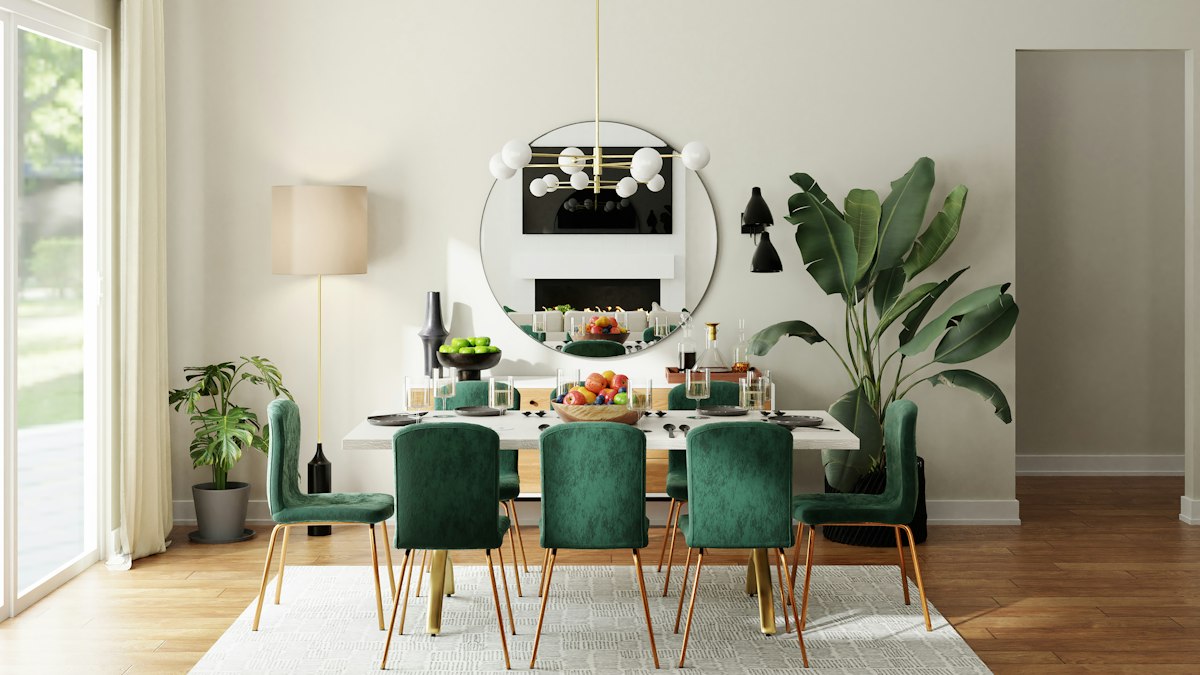
HDB dining areas are often the most constrained spaces in the home. In a 3-room flat, the dining area may share visual space with the living room in an open-plan layout, leaving room for a table of perhaps 100–120cm in length. In a 4-room flat, a dedicated dining area of roughly 3m x 3m is more common, comfortably accommodating a 6-seater table at 160cm — but only if the surrounding clearance is managed carefully.
The rule of thumb interior designers follow is a minimum of 90cm clearance between the table edge and any wall or fixed furniture. This allows a seated person to push their chair back and stand comfortably. Fall below 75cm and the dining experience becomes physically uncomfortable — people are constantly asking others to move, chairs catch on walls, and the room feels smaller than it is.
For most HDB households, the practical options are:
A 4-seater table at 120cm x 75cm, which gives generous clearance in a standard dining area. A 6-seater table at 160cm x 90cm, which works in a 4-room or 5-room flat but requires careful furniture placement. An extendable table that sits as a 4-seater in daily use and extends to a 6-seater or 8-seater for entertaining — arguably the most intelligent solution for HDB living.
Condo Dining Areas
Condo dining areas vary more dramatically than HDB equivalents. A 2-bedroom condo might have a dining space similar in scale to an HDB 4-room flat, while a 3-bedroom or larger unit may accommodate an 8-seater table with ease. In open-plan condo layouts — increasingly common in newer developments — the dining table often acts as a visual divider between the kitchen and living areas, making its aesthetic as important as its dimensions.
In condo settings, Radical Homes frequently recommends tables with visual lightness — marble tops on slim metal or tapered solid wood legs, glass-topped designs, or lighter-toned natural wood — to avoid the dining area feeling heavy in an open-plan space.
Landed Home Dining Rooms
In landed homes with dedicated dining rooms, the constraint reverses: the challenge is often filling the space appropriately rather than fitting within it. A 10 to 14-seater dining table is not uncommon in a spacious bungalow or semi-detached dining room, and the material and design choices can be bolder — darker marbles, thicker slab tops, more architecturally ambitious leg structures. Radical Homes custom dining tables for landed homes are often the statement piece of the entire ground floor.
Dining Table Shapes: Round vs Rectangular
Rectangular Tables
The rectangular dining table is the most common choice in Singapore and globally, for good reason. It is space-efficient in longer rooms, seats a defined number of people predictably, and is easy to push against a wall in very compact spaces when not in use. Rectangular tables also extend most naturally — the vast majority of extendable dining tables are rectangular.
The limitation of rectangular tables in HDB settings is that they can feel blocky in a compact space. A 160cm x 90cm table in a room that only has 90cm of clearance on two sides feels more like a boardroom than a dining area.
Round Tables
Round tables are underused in Singapore and arguably the smarter choice for many HDB dining areas. A round table of 120cm diameter seats four people comfortably, with no dead corners and a conversation dynamic that genuinely encourages people to interact. There's no "head of the table" — a cultural consideration that suits many Singapore households' dining rituals.
The challenge with round tables is extension. Most round extension mechanisms are either Lazy Susan-style (which adds a visual element to the centre) or leaf-extension systems that temporarily create an oval shape. Radical Homes designs round tables with a custom butterfly-leaf extension that maintains the round aesthetic at compact size and extends to an oval when entertaining.
Oval Tables
Oval tables combine the best of both shapes — the approachable, conversation-forward quality of a round table with the length needed to seat more guests. An oval at 180cm accommodates six to eight people and works well in open-plan condo and landed settings where there is room to walk around all sides.
Dining Table Materials: What Works in Singapore
Solid Wood
Solid wood dining tables — teak, oak, walnut, ash — are the enduring standard in quality furniture. Properly crafted and finished, solid wood is durable, repairable, and grows more characterful with age. In Singapore's climate, however, solid wood requires attention: it expands and contracts with humidity fluctuations, and without adequate conditioning, it can crack along the grain over time. Air-conditioned dining rooms mitigate this significantly.
Radical Homes sources sustainably certified solid wood and finishes all wood dining tables with a UV-resistant, penetrating oil finish that protects against humidity and heat while preserving the natural surface quality of the timber. This is a materially different standard from the lacquer-coated MDF surfaces common in mass-market dining tables.
Marble
Marble dining tables have become the aspirational choice for Singapore's design-forward households, and the appeal is entirely justified. Natural marble is heat-resistant, visually unique (no two marble slabs are identical), and extraordinarily durable when properly sealed. The concern most buyers have — staining — is largely mitigated by modern sealing treatments applied at the point of fabrication.
Radical Homes offers Carrara, Calacatta, and Nero Marquina marble dining tops, cut to custom dimensions and paired with custom base designs. The marble is sealed twice — once at the slab yard and once after fabrication — for maximum stain resistance.
The practical caveat: marble is heavy. A 180cm marble dining top can weigh 80–120kg depending on thickness. Ensure your floor loading is adequate, particularly in older HDB flats, and always use qualified movers for delivery and installation.
Sintered Stone
Sintered stone — sold under brand names such as Dekton and Neolith — is the engineering answer to natural stone's maintenance requirements. It is manufactured under extreme heat and pressure, producing a surface with near-zero porosity, exceptional scratch resistance, and full UV stability. Unlike marble, it requires no sealing and is resistant to etching from acidic foods and beverages.
For Singapore households with young children, or for those who want the aesthetic of stone without the maintenance demands, sintered stone is arguably the most practical premium choice available.
Glass
Glass dining tables — whether clear tempered glass, frosted glass, or smoked glass — create a sense of visual space that is particularly valuable in compact HDB dining areas. A glass-topped table in a small room reads as significantly less visually heavy than a solid wood or stone equivalent. Tempered glass at 10–12mm thickness is sufficiently robust for daily dining use.
The practical downside is fingerprints and cleaning frequency. Glass dining tables require wiping after virtually every meal. For households with children, this can become a source of friction. Smoked or tinted glass mitigates the visibility of marks more than clear glass.
MDF and Engineered Wood
Manufactured dining tables using MDF cores and laminate or veneer surfaces are common in the accessible market. They can look very convincing in showroom lighting, but the core material is vulnerable to moisture — particularly at edges and joints — and does not respond well to repair when damaged. For a dining table intended to last a decade or more, solid wood or stone should be the baseline.
Extendable vs Fixed: The HDB Entertainer's Dilemma
For most Singapore HDB households, the extendable dining table is the most intelligent solution on the market. On ordinary weekday evenings, a household of four or five doesn't need a 10-seater table occupying space. But during Chinese New Year, Deepavali celebrations, Hari Raya gatherings, or birthday dinners, the ability to seat eight or ten guests in the same room transforms the experience of home entertaining.
Quality extension mechanisms should glide smoothly, lock positively at the extended position, and — critically — maintain level alignment between the fixed top and the extension leaf. Cheap extension mechanisms develop wobble and misalignment within two to three years of regular use. Radical Homes extension tables use a concealed aluminium glide system with self-aligning leaf locks, maintaining a perfectly flush top surface when extended.
How Radical Homes Compares to Other Singapore Dining Table Brands
Castlery offers a strong mid-market range of dining tables with contemporary Scandinavian-influenced designs. Their marble and solid wood options are well-priced and photograph beautifully, making them a popular choice for first-time homeowners. FortyTwo provides a broad catalogue at value-to-mid-market pricing, useful for buyers working within tighter budgets. IKEA remains the default choice for the most budget-conscious buyers and those who prioritise flexibility — their NORDVIKEN and EKEDALEN extendable tables are functional and widely recognised.
What distinguishes Radical Homes is customisation depth and material quality. You are not choosing from a fixed catalogue — you are specifying exact dimensions, selecting from a curated range of premium materials, choosing your base design, and receiving a piece that is made specifically for your home. For discerning buyers furnishing a property they intend to live in for ten or more years, the investment in bespoke is measured against the cost of replacement cycles — and the custom option frequently wins over a decade.
*Disclaimer: Brand names mentioned are for comparison purposes only. Radical Homes is not affiliated with any third-party brands referenced.*
Conclusion: A Dining Table Built for Your Life in Singapore
The dining table is not furniture you should replace every five years. It is a long-term investment in how you live, eat, and connect with the people who matter to you. Getting the size right, the material right, and the aesthetic right requires more than a single showroom visit — it requires knowing your space, understanding your household's habits, and working with a maker who can deliver something genuinely tailored to both.
Radical Homes builds dining tables that are made to measure, crafted from premium materials, and designed to last. Visit radicalhomes.sg to explore the custom dining table range and book a consultation with our design team.
FAQ: Dining Table Singapore — Frequently Asked Questions
What size dining table fits in a standard HDB 4-room flat dining area in Singapore? A 4-room HDB flat typically accommodates a 4-seater dining table (120cm x 75cm) comfortably, or a 6-seater table (160cm x 90cm) if the dining area is separated from the living room. Always allow at least 90cm of clearance between the table edge and walls or cabinets to ensure seated guests can push chairs back and stand without obstruction.
Is marble a good material for a dining table in Singapore's climate? Yes, marble is well-suited to Singapore when properly sealed. It is heat-resistant, easy to wipe down, and visually striking. The main concern — staining from acidic foods or beverages — is largely addressed by professional sealing at the point of manufacture. If you want stone aesthetics without any maintenance requirements, sintered stone (Dekton, Neolith) is an excellent alternative.
Should I get a round or rectangular dining table for my HDB flat? For compact HDB dining areas, a round table is often the smarter choice. A 120cm round table seats four people comfortably and creates less visual heaviness in a small room than an equivalent rectangular table. It also encourages face-to-face conversation more naturally. Rectangular tables are better suited to longer rooms or open-plan layouts where extra seating length is needed.
Are extendable dining tables reliable for long-term use in Singapore? Quality extendable dining tables are highly reliable and practical for Singapore homeowners who want a space-efficient everyday table that can expand for entertaining. The key is the extension mechanism — look for aluminium glide systems with self-aligning leaf locks rather than cheap plastic sliders, which develop wobble and misalignment over time.
How long does it take to get a custom dining table made in Singapore, and what is the process like with Radical Homes? Custom dining tables at Radical Homes typically have a lead time of 6–10 weeks, depending on material availability and current production schedules. The process begins with a design consultation — either in person or remotely — where dimensions, material, finish, and base style are confirmed. A production drawing is provided for approval before fabrication begins, ensuring there are no surprises at delivery.