

Living Room Cabinet Singapore: How to Choose the Right Storage (2026)
Living Room Cabinet Singapore: How to Choose the Right Storage for Your HDB or Condo
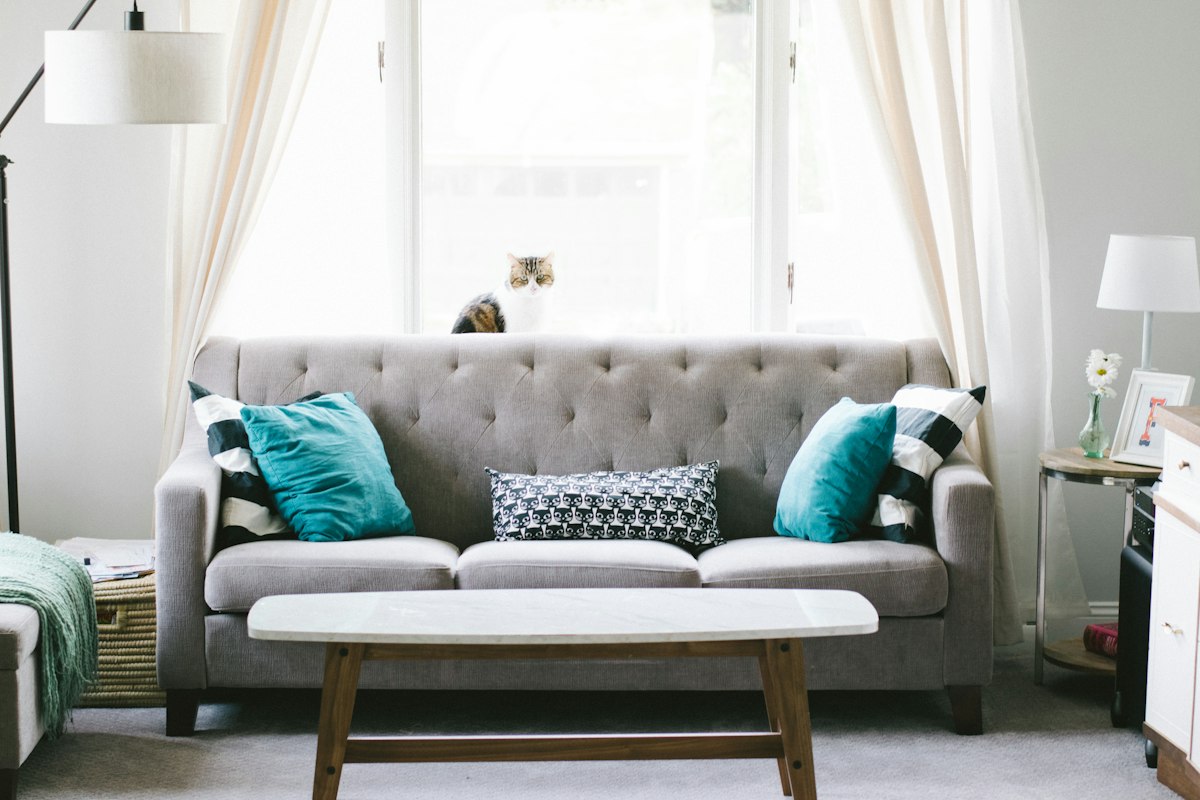
Your living room cabinet does more than hold things — in a Singapore home, it defines whether the space feels curated or cluttered. With HDB flats averaging between 90 and 110 sqm and open-concept layouts becoming the norm in BTOs and resale units alike, the cabinet you choose determines how well your living room breathes, functions, and impresses. Get the wrong piece and you lose both floor space and visual calm; get it right and you gain a room that genuinely works.
Quick Answer: What to Look for in a Living Room Cabinet in Singapore
- Match cabinet depth to your layout — for HDB living rooms, aim for cabinets no deeper than 40–45cm to preserve circulation space
- Choose the right type for your need — TV consoles for media storage, display cabinets for collectibles and décor, sideboards for general storage, modular wall units for whole-wall solutions
- Material matters in Singapore's humidity — solid wood and marine-grade engineered wood outperform cheaper particleboard in our climate
- Balance open and closed storage — a good rule is 60% closed (clutter-free) to 40% open display
- Go custom if your layout is irregular — off-the-shelf sizing rarely fits well around feature walls, aircon ledges, or beam columns
According to the Housing Development Board, over 80% of Singaporeans live in HDB flats — making compact, efficient living room storage not a luxury but a necessity.
Those five points are a solid starting framework. But here is the challenge most homeowners discover too late: choosing a cabinet based on looks alone — without accounting for your specific HDB dimensions, your lifestyle storage demands, and how the piece interacts with Singapore's humidity and lighting conditions — leads to expensive mistakes. The right living room cabinet is a decision that rewards taking an extra hour to think through properly. Here is how to do exactly that.
Understanding Your Living Room: HDB Dimensions and Layout Realities
Before you browse a single cabinet, you need to know what you are working with. Most Singaporean living rooms fall into predictable size bands depending on flat type. A 3-room BTO will typically have a living area of roughly 16–19 sqm. A 4-room flat gives you 20–24 sqm. A 5-room or executive flat can reach 26–32 sqm. Condominiums vary more widely, but the majority of two- and three-bedroom units still sit under 100 sqm total.
What this means practically is that scale control is everything. A display cabinet that looks proportional in a showroom — say, 220cm tall and 120cm wide — can dominate a 4-room HDB living room and make it feel like a storage unit. The same cabinet in a 5-room or condo living room looks anchored and intentional. Always measure your wall run, note any obstructions (power sockets, aircon trunking, structural columns), and calculate what percentage of that wall you are comfortable dedicating to the piece.
Open-concept BTO layouts present a particular challenge. When your living and dining zones share an uninterrupted floor plate, a cabinet that is too heavy visually will kill the sense of space. Here, low-profile sideboards, glass-fronted display units, or wall-hung floating consoles tend to work far better than floor-to-ceiling solid cabinetry.
Resale HDB Storage Challenges
Resale flats — particularly those built before 2000 — often come with quirks that BTOs do not: irregular wall recesses, tiled feature walls, exposed conduit runs, and non-standard room proportions. In these cases, a fully custom cabinet built to fit the actual space is almost always the better investment. A bespoke piece that slots cleanly into a 278cm wall run, accounts for the aircon ledge above, and works around the trunking on the left will always outperform a 90cm + 90cm + 90cm off-the-shelf combination pushed together with visible gaps.
The Five Types of Living Room Cabinets — and When to Use Each
There is no single "best" living room cabinet. What works depends on what you need to store, how you want the room to feel, and how much floor space you can afford to commit. These are the five main types worth understanding.
Display Cabinet
A display cabinet — typically glass-fronted or open-shelved — is designed to showcase. Think curated books, framed photographs, ceramic collections, or decorative objects. In a Singapore home, a well-composed display cabinet signals that the space is considered and personal. The risk is clutter: an under-curated display cabinet becomes a visual dumping ground within weeks. If you are choosing a display cabinet, commit to keeping it edited. Fewer, better pieces always read more luxuriously than maximum fill.
Sideboard
The sideboard — a low, horizontal cabinet typically 80–100cm tall and 150–200cm wide — is one of the most versatile pieces in a living room. It provides generous closed storage (perfect for board games, spare cushions, media equipment, and the general overflow of daily life), a flat surface for décor or a lamp, and because of its low profile, it keeps the upper wall open and airy. For HDB living rooms where ceiling height is a constraint, a sideboard is often the most balanced choice.
TV Console with Storage
The TV console is the most functionally specific piece on this list, and for most Singapore households, it anchors the entire living room layout. A well-designed TV console does three things simultaneously: it positions your screen at the correct ergonomic height (eye level when seated, typically 100–110cm from floor to screen centre), provides cable management, and delivers meaningful storage — drawers for remotes and accessories, shelving for soundbars and streaming boxes, and closed compartments for media that you do not want on display. Floating wall-mounted TV consoles are increasingly popular in open-concept BTOs because they free up floor space and make rooms easier to clean.
Bookshelf and Display Unit
A bookshelf or display unit — open, vertical, often floor-to-ceiling — creates visual height in a room and works particularly well in resale flats with higher ceilings. The key in Singapore's context is material selection: open shelving in solid wood or powder-coated steel ages well, while laminate-edged particleboard shelving tends to chip and swell with humidity over time. If you are investing in a floor-to-ceiling unit, invest in the material quality to match.
Modular Wall Unit
A modular wall unit combines multiple cabinet types — upper closed storage, open shelving, lower drawers, and often a central TV recess — into a single cohesive system. It is the highest-commitment option in terms of cost and installation, but it is also the most transformative. A well-designed modular wall unit turns a plain living room wall into a functional centrepiece. For homeowners who do significant renovation work, particularly those with 5-room flats, executive apartments, or larger condos, a custom modular wall unit often delivers the best long-term value per square metre of wall used.
Comparing Cabinet Types: Display, Storage, and Modular
| Type | Best For | Typical Width | Storage Capacity | Visual Weight | HDB Suitability |
|---|---|---|---|---|---|
| Display Cabinet | Collectibles, books, curated objects | 60–120cm | Low–Medium | Medium | 3-room and above |
| Sideboard | General closed storage, décor surface | 120–200cm | High | Low | All flat types |
| TV Console with Storage | Media equipment, cables, daily access | 120–200cm | Medium | Low–Medium | All flat types |
| Bookshelf / Display Unit | Books, plants, vertical visual interest | 60–160cm | Medium | Medium–High | 4-room and above |
| Modular Wall Unit | Whole-wall solution, maximum storage + display | 200–400cm | Very High | High | 5-room, EA, Condo |
Materials: What Holds Up in Singapore's Climate
Singapore's year-round humidity — typically between 70% and 85% — is genuinely hard on furniture. Understanding how different materials perform here will save you from replacing a cabinet years before you should have to.
Solid wood — teak, walnut, oak, rubber wood — is the most durable long-term choice. It handles humidity fluctuations well when properly finished, ages beautifully, and can be refinished if scratched or worn. The investment is higher upfront, but the lifespan stretches to decades rather than years. Radical Homes works extensively with solid wood for exactly this reason: it is the material that rewards patience.
Engineered wood — particularly marine-grade or moisture-resistant MDF and plywood — performs well in Singapore if the core is genuinely moisture-resistant and the edges are properly sealed. The risk is in specification: cheaper particleboard with standard laminate faces will swell at the edges and delaminate within a few years in our humidity. When choosing an engineered wood cabinet, always ask about the substrate specification and edge treatment, not just the surface finish.
Glass-fronted cabinets are an elegant solution for display storage. Tempered glass doors protect contents from dust (a genuine concern in Singapore apartments), allow visual access to what is inside, and keep a sense of lightness that solid-door cabinets sacrifice. They work particularly well in smaller living rooms where visual permeability is important.
Rattan and cane weave panels have seen a strong resurgence in Singapore interiors, particularly in the Japandi and tropical-contemporary aesthetics that currently dominate renovation feeds. Rattan ages well in humidity, carries natural warmth, and introduces texture without visual heaviness. It tends to work best as a cabinet panel insert rather than a structural material — combined with a solid wood or metal frame.
Getting the Storage-to-Display Balance Right
One of the most common mistakes in living room cabinet planning is misjudging the ratio of open display to closed storage. Open shelving looks beautiful in showrooms and on renovation blogs because it is intentionally styled. In a real home — with school bags, spare cables, medication, household admin, and the accumulated detritus of daily life — the same open shelving becomes chaotic fast.
A practical framework for Singapore households: aim for roughly 60% closed storage and 40% open display. The closed storage absorbs real-life clutter invisibly. The open display becomes the curated face of the room — a few plants, a piece of sculpture, some books turned spine-out. If you are someone who accumulates or has young children, shift that ratio to 70–30 or even 80–20 closed. You can always add a decorative tray or two on the closed cabinet tops to get your display hit without committing wall space to open shelving you will struggle to keep tidy.
How Other Brands Compare — and Where Custom Fits In
The Singapore market has no shortage of furniture options. IKEA offers highly configurable systems like the KALLAX and BESTA ranges at accessible price points — these work well as short-term or entry-level solutions, particularly in rental properties or for homeowners who anticipate moving. FortyTwo provides a broader mid-range selection online with reasonable delivery lead times. Urban Mood offers contemporary pieces that skew Scandinavian and modern, with solid mid-market positioning. Each of these retailers serves a genuine need in the market.
Where custom furniture — such as the pieces made by Radical Homes — diverges is in fit, material quality, and longevity. A modular system from a mass-market retailer will always be designed around standard module sizes, which rarely align perfectly with the wall dimensions of a specific HDB or condo unit. A custom cabinet is built to your exact wall run, your exact ceiling height, and your exact material and finish preferences. It costs more upfront. Over a ten-year horizon — accounting for the cost of eventual replacement of off-the-shelf pieces that do not quite fit — the economics tend to favour bespoke.
Disclaimer: Brand comparisons above are provided for general consumer reference only. Radical Homes is not affiliated with Urban Mood, FortyTwo, or IKEA. Pricing and availability at third-party retailers are subject to change.
The Right Living Room Cabinet Transforms the Whole Room
A living room cabinet in Singapore is rarely just storage. In the compact, high-stakes context of HDB and condo living, it is one of the most visible and functional pieces in your home. It shapes how the room reads — how spacious it feels, how organised it appears, how much of your personality it expresses. The decision deserves more attention than a Saturday afternoon at a furniture mall.
Take your measurements seriously. Think carefully about the balance between display and closed storage. Invest in materials that will perform over years in Singapore's climate rather than deteriorate within months. And if your space has any quirk — an irregular wall run, an awkward column, a layout that standard sizing never quite fits — consider the value of going custom.
Radical Homes designs and crafts bespoke living room cabinets, TV consoles, sideboards, and full modular wall units for Singapore homes. Every piece is made to your exact specifications, in materials chosen for both beauty and durability. Explore the Radical Homes living room collection or get in touch to discuss a custom piece for your home.
Frequently Asked Questions
What size living room cabinet should I get for a 4-room HDB flat in Singapore?
For a standard 4-room HDB living room — typically around 20–24 sqm — a sideboard or TV console in the 150–180cm width range tends to work well proportionally. If you are considering a modular wall unit, aim to occupy no more than 70–75% of the main feature wall to avoid the room feeling closed in. Keep cabinet depth to 40–45cm or less to preserve walkway clearance, particularly in open-concept layouts where the living and dining zones share the same floor plate.
Which living room cabinet material is best for Singapore's humidity — solid wood, engineered wood, or rattan?
Solid wood is the most durable long-term choice in Singapore's high-humidity environment, provided it has been properly finished and sealed. Teak and solid rubber wood are particularly well-suited to our climate. Engineered wood (marine-grade or moisture-resistant MDF/plywood) performs acceptably if the substrate quality is high and edges are properly treated — avoid standard particleboard, which will swell and delaminate over time. Rattan is excellent as a panel insert or decorative element but should be paired with a solid structural frame. In general, invest in the highest material grade you can afford; the long-term cost of replacement far exceeds the upfront premium for quality.
What is the difference between a display cabinet and a storage cabinet for a Singapore living room, and which do I need?
A display cabinet — typically glass-fronted or open-shelved — is designed to show things: books, décor, collectibles. A storage cabinet prioritises concealed capacity, usually with solid doors and internal drawers or shelves to hide clutter. Most Singapore households benefit most from a blend: a piece that combines closed storage (for the everyday overflow of real life) with a smaller open or glass-fronted section for curated display. A practical starting ratio is 60% closed to 40% open. If you have young children or tend to accumulate, shift further towards closed storage.
Is a custom-built living room cabinet worth it compared to buying from IKEA or FortyTwo in Singapore?
For rental properties, BTOs where you plan to move within five years, or spaces with standard dimensions, a well-chosen off-the-shelf cabinet from IKEA or FortyTwo can be entirely appropriate. Where custom becomes worth the investment is when: your wall dimensions are non-standard (common in older resale HDB flats), you want a specific material or finish not available off-the-shelf, you need integrated solutions (TV console, shelving, and storage in one seamless run), or you are making a long-term home where the piece needs to last a decade or more. Custom furniture is designed once for your exact space — it never has the awkward gaps or mismatched heights that assembled combinations produce.
How do I choose a living room cabinet that works in an open-concept BTO layout in Singapore?
Open-concept BTO layouts demand furniture that defines zones without blocking them. For living room cabinets in these spaces, prioritise low-profile pieces (sideboards, floating TV consoles) that keep the upper portion of the wall open and maintain sightlines across the floor plate. Avoid floor-to-ceiling solid cabinetry in the living zone unless it runs along the outermost perimeter wall — placing it mid-room or on a wall shared with the dining zone can make both spaces feel smaller. Glass-fronted or partially open units help maintain visual permeability. If you want a modular wall unit, keep it to one wall only and ensure the material finish is consistent with the rest of the interior so it reads as designed rather than inserted.