

Study Table Singapore: The WFH Desk Buying Guide
Working from home has permanently shifted how Singaporeans think about their study table. What was once a secondary piece of furniture — a surface for homework and occasional admin — is now, for hundreds of thousands of Singapore households, the centrepiece of a daily professional environment. The quality of your desk, its size relative to your room, and how well it manages the cables, screens, and equipment of a modern work setup are no longer minor lifestyle considerations. They affect your productivity, your posture, and the quality of your working hours.
Quick Answer: Study Table Essentials for Singapore WFH
- For a Singapore HDB study room of 8–10 sqm, a desk of 140–160cm width allows comfortable dual-monitor setup with working space to spare
- Ergonomic desk height is 68–76cm for seated work — adjust based on your chair height and arm position; elbows should be at approximately 90° when typing
- Cable management is non-negotiable in a WFH setup — integrated cable trays, routed channels, and desk-mounted power strips prevent the desk from becoming a hazard
- Standing desks improve circulation and reduce lower-back fatigue — recommended for those working 6+ hours daily at a desk
- A 2025 survey of Singapore remote workers found that 74% had not optimised their home desk setup for ergonomics, reporting increased neck and shoulder discomfort within the first year of full-time WFH
The study table you work at shapes your body over thousands of hours. A desk that is too low leads to hunching; too narrow and you cannot maintain effective document-plus-screen setups; poor cable management means a cluttered visual environment that subtly degrades focus and professionalism on video calls. Getting this right is not an aesthetic indulgence — it is an investment in your physical health and professional performance.
Study Room Sizing in Singapore HDB Flats: The Realistic Starting Point
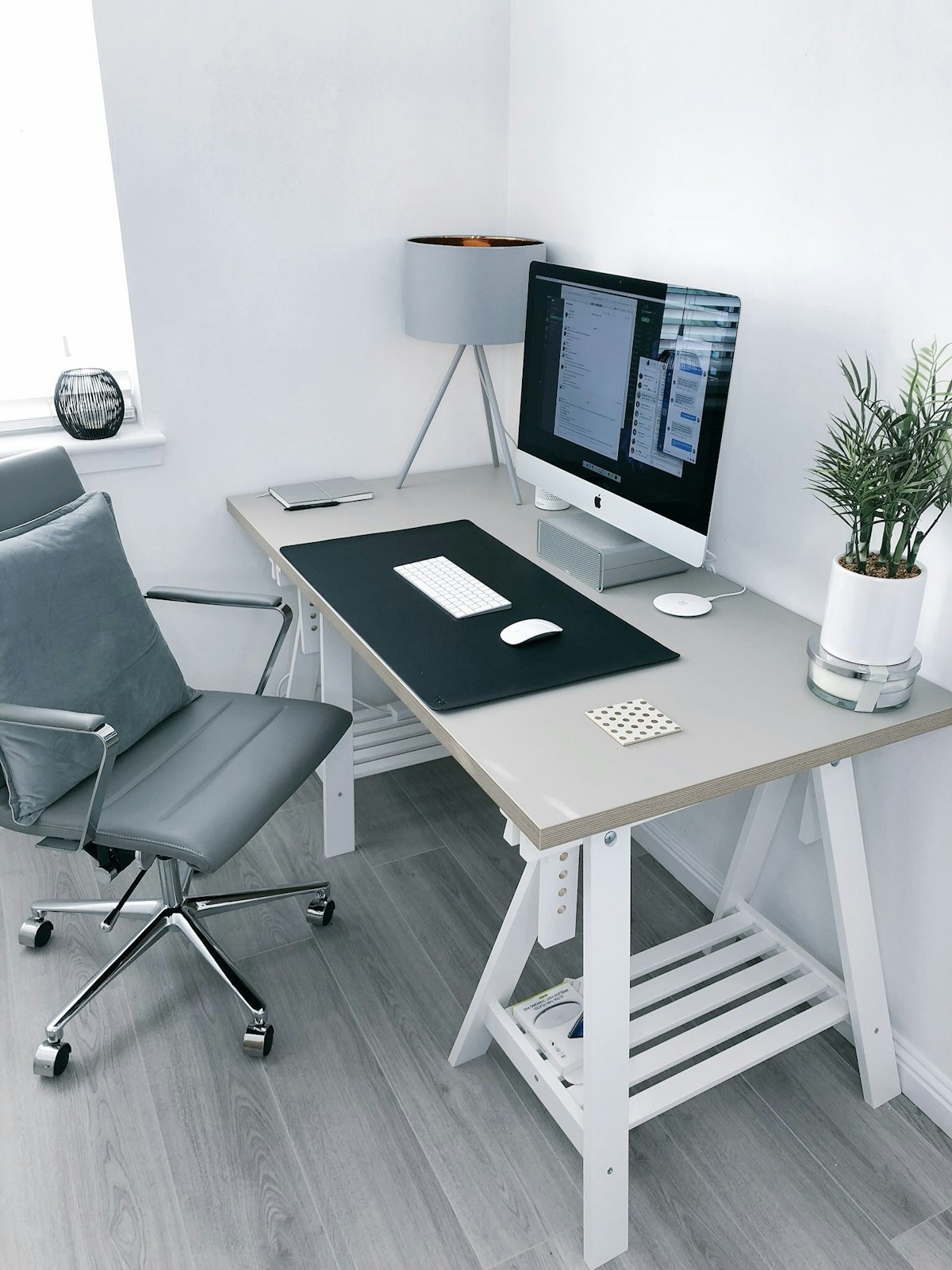
Most Singapore HDB study rooms are compact by global standards. A study room in a 4-room flat typically measures 8–10 sqm — enough for a desk, a chair, and light shelving if organised well, but unforgiving of poor furniture choices. A 5-room flat may include a slightly larger study of 10–12 sqm, particularly in newer BTO developments where study rooms are designed with WFH in mind.
The desk is inevitably the largest piece of furniture in the room and must be sized against the available wall space while leaving adequate circulation behind the chair. The minimum clearance between the back of an office chair (when pushed back from the desk) and the nearest wall or furniture is 90cm for comfortable movement — 75cm is the absolute minimum for functional use.
Recommended Desk Sizes by Room Type
For a standard HDB study room of 8–10 sqm, a desk of 130–160cm in width accommodates a dual-monitor setup comfortably, with space for a laptop, notebook, and the small items that accumulate on a working desk. Depth should be 65–75cm minimum — a shallow desk forces monitors too close and leaves insufficient forearm support for keyboard and mouse use.
For a larger HDB study or condo home office of 10–14 sqm, an L-shaped desk configuration becomes viable and genuinely transforms the working environment. An L-shaped desk provides a primary work surface of 150–180cm and a secondary return of 90–120cm — allowing the separation of computer work, physical documents, and video call positioning. Radical Homes builds L-shaped study desks to custom dimensions, fitting the exact corner of your study room and delivering an integrated look that off-the-shelf L-desks — with their visible joins and mismatched finishes — cannot match.
For a living room or bedroom corner WFH setup (common in 3-room HDB households where a dedicated study is not available), a compact desk of 100–120cm with disciplined storage organisation is the practical solution. A wall-mounted fold-up desk is worth considering here — it removes the visual footprint of the desk entirely when not in use.
Ergonomics: Getting the Height Right
Desk height is the single most impactful ergonomic variable in a home office setup — and the most frequently wrong. Standard desks are manufactured at 72–75cm height, which is calibrated for average Western male physiology. For many Singapore users — particularly women or shorter individuals — a standard height desk results in elevated shoulders, compressed wrists, and over time, neck and upper-back discomfort.
The correct seated desk height positions your elbows at approximately 90° when your hands are on the keyboard, your forearms approximately parallel to the floor, and your shoulders relaxed. Calculate your ideal desk height by sitting in your chair with your back straight and feet flat on the floor, measuring the distance from the floor to your elbow — that measurement, minus approximately 5cm, is your optimal desk height. For most Singapore adults, this falls between 68cm and 74cm.
If your chair is height-adjustable — as all quality office chairs are — you can compensate for a fixed-height desk to a degree by raising or lowering the chair and using a monitor stand or arm to maintain correct eye-level positioning. But a desk built to your personal ergonomic specification eliminates the need for these compensations entirely.
Standing Desks in Singapore
Height-adjustable standing desks have moved from a novelty to a genuine productivity tool, and for Singapore WFH professionals who sit for more than five to six hours daily, the evidence for standing desk use is persuasive. Standing intermittently — 20 to 30 minutes per hour — reduces lower back fatigue, improves circulation, and according to multiple occupational health studies, modestly improves sustained concentration over long work sessions.
The practical specifications to look for in a Singapore context:
Motor quality determines the desk's long-term reliability. Single-motor systems are sufficient for lighter setups (one monitor, minimal accessories). Dual-motor systems are recommended for heavier setups or desks wider than 150cm.
Weight capacity must accommodate the combined weight of monitors, monitors stands, audio equipment, and anything else on the desk surface. Most quality standing desk systems specify a dynamic weight capacity of 80–120kg — adequate for all but the most heavily loaded setups.
Noise level at adjustment matters more than most buyers anticipate. In a Singapore HDB study room shared with sleeping children or a working partner in the adjacent room, a noisy standing desk motor is a genuine domestic friction point. Look for motors rated at ≤50dB during adjustment.
Radical Homes offers custom-dimensioned standing desk frames paired with bespoke solid wood or sintered stone desk tops — delivering the ergonomic benefits of a standing desk with a material and finish quality that most commercial standing desk brands do not approach.
Cable Management: The Most Underrated WFH Priority
A modern WFH setup generates a significant number of cables: power cables for desktop or laptop, monitor power cables, display cables (HDMI, DisplayPort, USB-C), speaker cables, USB hub power, keyboard and mouse cables or charging cables, desk lamp, and the extension block or power strip tying all of it together. Without deliberate management, this becomes a visible, tangled hazard that makes the desk look chaotic, makes cleaning difficult, and creates genuine trip and pull risks.
Effective cable management in a home office starts with the desk itself. A desk with a recessed cable tray below the surface — running the width of the back edge — conceals the bulk of cabling from view entirely. Grommet holes in the desk surface at strategic positions (one at the left, one at the right, one centre for the main power drop) allow cables to run through the surface cleanly. A desk-mounted power strip mounted to the underside or cable tray means all plugs are out of sight.
Radical Homes integrates cable management into every custom study desk as standard: routed cable channels, matching-finish grommet inserts, and a hidden cable tray finished to match the desk surface. The result is a desk that looks clean from every angle — both on video calls and in person.
For existing desks, a retrofit approach using adhesive cable raceways, velcro cable ties, and an under-desk cable management tray can significantly reduce visual clutter at modest cost. The key is consistency — all cables should run in the same direction and be tied at the same intervals.
Study Desk Materials: What Works for WFH in Singapore
Solid Wood and Wood Veneer
Solid wood desks — oak, walnut, ash — are the aspirational choice for Singapore home offices and for good reason. The warmth and character of real wood make a working environment feel significantly more considered than a laminate surface, and a properly finished solid wood desk improves with age and use. In Singapore's climate, solid wood requires a penetrating oil finish rather than a surface lacquer — the oil allows the wood to breathe and respond to humidity fluctuations without cracking.
Wood veneer over MDF delivers the aesthetic of solid wood at reduced weight and with better dimensional stability in Singapore's humidity. For desk tops wider than 140cm, veneer over MDF is often the more practical specification.
Sintered Stone and Compact Laminate
Sintered stone desk tops — the same material used in premium kitchen countertops — are an emerging choice for Singapore home offices among buyers who want a surface that is completely impervious to coffee spills, pen marks, heat from laptops, and the general punishment a working desk receives. Sintered stone at 12mm thickness is rigid enough for desk-top use without an additional substrate and will not swell or warp in humidity.
Compact laminate (also known as HPL — high-pressure laminate) is the workhorse material of commercial office furniture and for good reason: it is scratch-resistant, easy to clean, dimensionally stable, and available in a very wide range of finishes and colours. For a WFH setup where performance is prioritised over natural material aesthetics, a compact laminate desk top is an excellent choice.
Glass Tops
Glass desk tops — tempered or toughened glass — are visually sleek and popular in minimalist Singapore home office setups. Clear glass creates a sense of openness and is easy to clean. The functional limitation is vibration transmission — glass tops transmit typing vibration more noticeably than timber or stone, which can be subtle but perceptible during video calls. Anti-vibration desk pads address this for keyboard use.
How Radical Homes Compares to Other Singapore Study Table Brands
HipVan offers a well-curated selection of WFH desks with a design-forward aesthetic at mid-market pricing. Their solid wood and veneer options are competitively priced and well-reviewed, making them a sensible choice for buyers who want a quality desk without a lengthy lead time. FortyTwo provides one of Singapore's broadest catalogues of study tables, from entry-level MDF tops to mid-range solid wood, with a focus on value and volume. Flexispot is the dominant name in height-adjustable standing desks in Singapore, offering a reliable range of motorised sit-stand frames at accessible to mid-range pricing — a strong choice for buyers who specifically want a standing desk and are comfortable pairing a commercial frame with their own desk top.
What Radical Homes provides is a different category of product entirely: a custom-dimensioned desk built to your exact specifications, in premium materials, with integrated cable management and ergonomic specification. A HipVan desk is a well-designed off-the-shelf product. A Radical Homes study desk is built for your specific room, your specific workflow, and your specific aesthetic — a categorically different proposition for the buyer who has decided the WFH environment deserves the same level of intention as the rest of the home.
*Disclaimer: Brand names mentioned are for comparison purposes only. Radical Homes is not affiliated with any third-party brands referenced.*
Conclusion: A Study Desk Designed Around How You Actually Work
The average Singapore WFH professional spends eight to ten hours a day at their desk. Over a year, that is more than 2,000 hours. The quality of those hours — their ergonomic comfort, their organisational clarity, their aesthetic environment — is shaped by the desk you work at. A study table that is the right size, the right height, the right material, and the right configuration for how you actually work is not a luxury. It is an investment in the quality of your professional life.
Radical Homes builds custom study tables and home office furniture that are specified precisely for your room and your workflow. Visit radicalhomes.sg to explore the range and book a design consultation with our team.
FAQ: Study Table Singapore — Frequently Asked Questions
What is the ideal study table size for a WFH setup in an HDB study room in Singapore? For a standard HDB study room of 8–10 sqm, a desk of 140–160cm width and 65–75cm depth provides sufficient space for a dual-monitor setup with working room for physical documents and accessories. If the room has an available corner, an L-shaped configuration with a primary surface of 150cm and a 100cm return dramatically increases usable workspace without occupying more floor area than a straight desk.
Should I get a standing desk or a regular fixed-height desk for working from home in Singapore? If you work at your desk for more than five to six hours daily, a height-adjustable standing desk is worth the investment. Standing intermittently — 20 to 30 minutes per hour — reduces lower-back fatigue and improves circulation. If your work sessions are shorter or you are primarily in meetings away from your desk, a well-specified fixed-height desk at the correct ergonomic height is sufficient and typically offers better material quality at the same price point.
How do I manage cables neatly on a study table in Singapore for a WFH setup? The most effective solution is a desk with an integrated cable tray below the back edge, grommet holes at key positions, and a desk-mounted power strip. If your current desk lacks these features, retrofit solutions include adhesive under-desk cable management trays, velcro cable ties, and cable raceways that route cables along the underside of the desk surface. Discipline is the constant — cables should be tied and routed consistently, not managed reactively each time a new device is added.
What is the correct desk height for a person of average Singapore height working from home? For most Singaporean adults (typically 155–175cm tall), the ergonomic desk height falls between 68cm and 74cm. Calculate yours by sitting in your office chair with feet flat on the floor and back straight, measuring from the floor to your elbow — your ideal desk height is approximately 5cm below that measurement. Most standard desks at 72–75cm are comfortable for taller users; shorter users often benefit from a desk at 68–70cm.
Is a custom study desk from Radical Homes worth it compared to a standard desk from HipVan or Flexispot? For a dedicated WFH professional who uses their desk daily and values the quality of their working environment, yes. A custom desk from Radical Homes is built to your exact room dimensions, your ergonomic requirements, and your material preferences — with integrated cable management included as standard. The cost is higher than off-the-shelf alternatives, but the result is a workspace that is precisely right for your home and your workflow, rather than approximately right within fixed catalogue constraints.